J. East China Norm. Univ. Philos. Soc. Sci ›› 2025, Vol. 57 ›› Issue (3): 120-130.doi: 10.16382/j.cnki.1000-5579.2025.03.012
Previous Articles
Xuling Bi
Online:
Published:
Abstract:
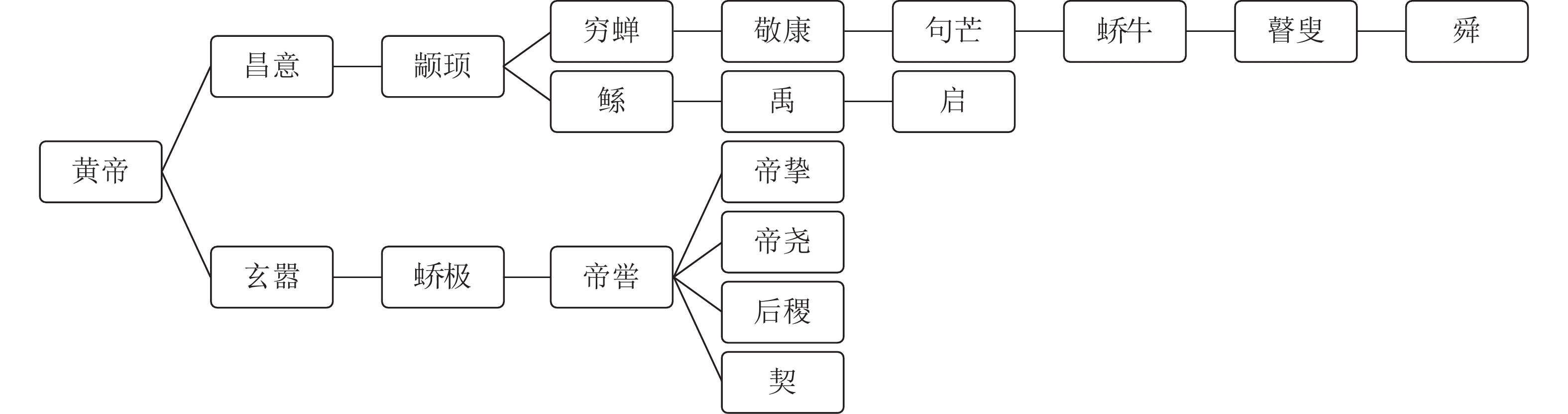
The formation and evolution of ancestral cosmogonic myths epitomize the crystallization of Chinese civilizational unity. When narrow blood-based ancestor worship evolved into profound cultural progenitor worship, ancestral cosmogonic myths emerged. The ethical identity demonstrated by cultural progenitor worship created an ethical impetus for the unity of Chinese civilization. Myths centered on cultural progenitors played a critical role in enhancing cohesion among diverse ethnic groups, serving as a spiritual and cultural force unifying communities of varied origins. Although ancestral cosmogonic myths feature numerous cultural progenitors, their narratives remain cohesive due to the Yan-Huang lineage as a core thematic thread. This lineage reflects a logical identity between familial reproduction and ethnic evolution, establishing a logical impetus for the unity of Chinese civilization. Additionally, these myths functioned as a vehicle for early practices of the unity of Chinese civilization. The Shang and Zhou dynasties utilized myth-making to inherit traditions from preceding dynasties, integrating the Xia, Shang, and Zhou into a continuous whole through ethical and logical motivations. The myths also preserved and disseminated ethics, logic, ideals, morality, knowledge, and technology accumulated in early Chinese civilization. Therefore, deepening research on cosmogonic myths is essential to broadened and refined explorations into the origins of Chinese civilization.
Key words: Chinese civilization, unity, ancestral cosmogonic myths, ethical motivation, logical motivation
Xuling Bi. Ancestral Cosmogonic Myths and the Unity of Chinese Civilization[J]. J. East China Norm. Univ. Philos. Soc. Sci, 2025, 57(3): 120-130.
/ / Recommend
Add to citation manager EndNote|Reference Manager|ProCite|BibTeX|RefWorks
URL: https://xbzs.ecnu.edu.cn/EN/10.16382/j.cnki.1000-5579.2025.03.012
https://xbzs.ecnu.edu.cn/EN/Y2025/V57/I3/120
"

 国家社会科学基金学术期刊资助入选期刊