华东师范大学学报(哲学社会科学版) ›› 2025, Vol. 57 ›› Issue (4): 36-47.doi: 10.16382/j.cnki.1000-5579.2025.04.003

• 重启科技与人文对话 • 上一篇    下一篇

预测加工理论的历史演进

武锐, 李恒威   

  • 接受日期:2025-06-20 出版日期:2025-07-15 发布日期:2025-07-31
  • 作者简介:武锐,杭州电子科技大学马克思主义学院讲师(杭州,310018)
    李恒威,浙江大学哲学学院教授(杭州,310058)
  • 基金资助:
    国家社科基金一般项目“心智的生命观研究”(项目编号:20BZX045)。

The Historical Development of Predictive Processing Theory

Rui Wu, Hengwei Li   

  • Accepted:2025-06-20 Online:2025-07-15 Published:2025-07-31

摘要:

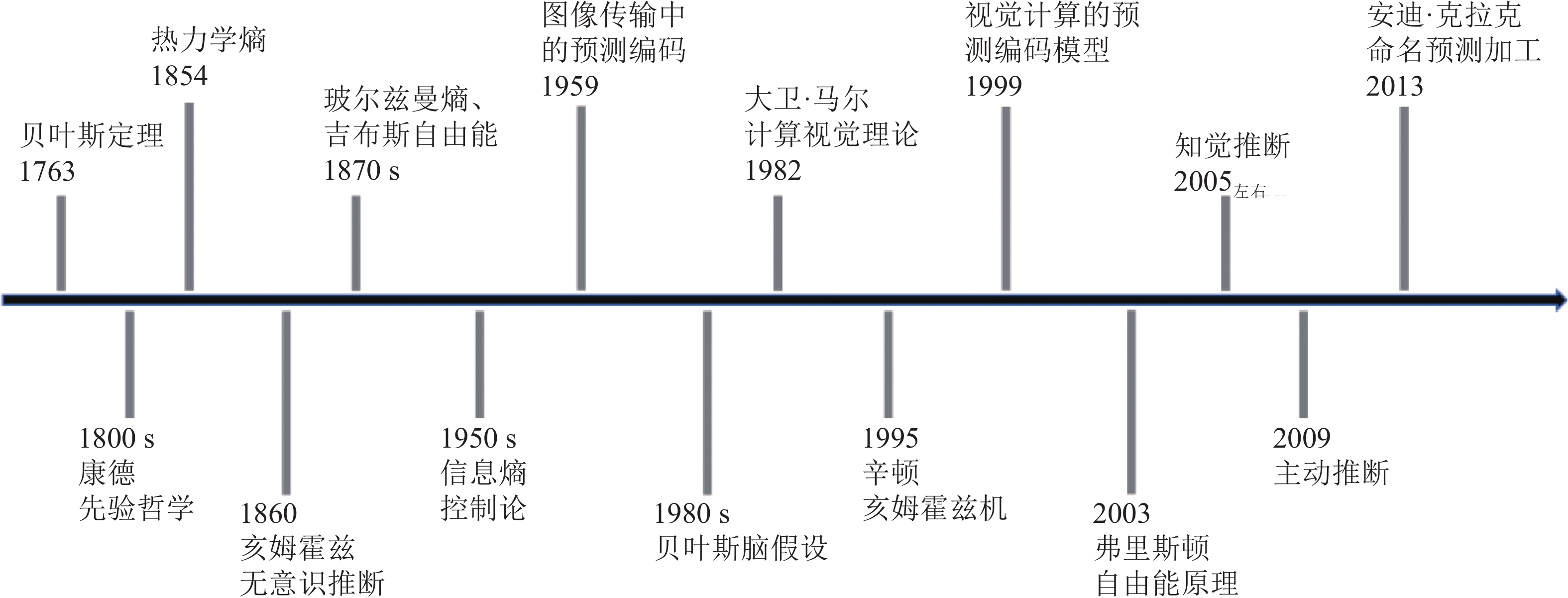
预测加工理论,作为近年来在认知科学领域崛起的一种具有广泛包容性的心智研究范式,备受瞩目。许多认知科学领域的翘楚对其充满期待,认为它“有望为人类心智研究提供一个统一框架”。预测加工理论的发展过程可以划分为哲学与自然科学两大阶段。在哲学阶段,预测加工理论的历史渊源主要包括康德的先验哲学和亥姆霍兹的无意识推断;进入自然科学阶段后,预测加工理论在信息传输理论中的预测编码、贝叶斯脑、深度学习中的亥姆霍兹算法、视觉计算中的预测编码系统以及自由能原理等推动下逐渐发展完善。这一历史分析有助于廓清预测加工理论发展的关键阶段特征及相关概念的内在联系。

关键词: 预测加工, 预测编码, 自由能原理, 主动推断

Abstract:

Emerging as a powerful research paradigm with broad inclusiveness in cognitive science in recent years, the predictive processing theory has garnered significant attention. Leading figures in the field anticipate that it will “offer the promise of providing a unified framework for the study of the human mind.” The development of the predictive processing theory can be divided into two major stages, i.e., philosophy and natural science. In the philosophical stage, its historical roots primarily include Kant’s transcendental philosophy and Helmholtz’s unconscious inference. In the natural science stage, it has gradually developed and improved through theories such as predictive coding in information transmission, Bayesian brain, Helmholtz algorithm in deep learning, predictive coding in visual computing, and free energy principle. This historical analysis helps to clarify the key characteristics of the developmental stages of the predictive processing theory and the intrinsic connections between related concepts.

Key words: predictive processing, predictive coding, free energy principle, active inference