华东师范大学学报(哲学社会科学版) ›› 2025, Vol. 57 ›› Issue (5): 90-104.doi: 10.16382/j.cnki.1000-5579.2025.05.008

• 语言学研究 • 上一篇    下一篇

元规则:新言语行为分析的一个重要范畴

胡范铸   

  • 出版日期:2025-09-15 发布日期:2025-10-09
  • 作者简介:胡范铸,韩山师范学院文学与新闻传播学院特聘教授(潮州,521041);华东师范大学国家话语生态研究中心首席专家

Meta-Rules:An Important Category in the New Speech Act Analysis

Fanzhu Hu   

  • Online:2025-09-15 Published:2025-10-09

摘要:

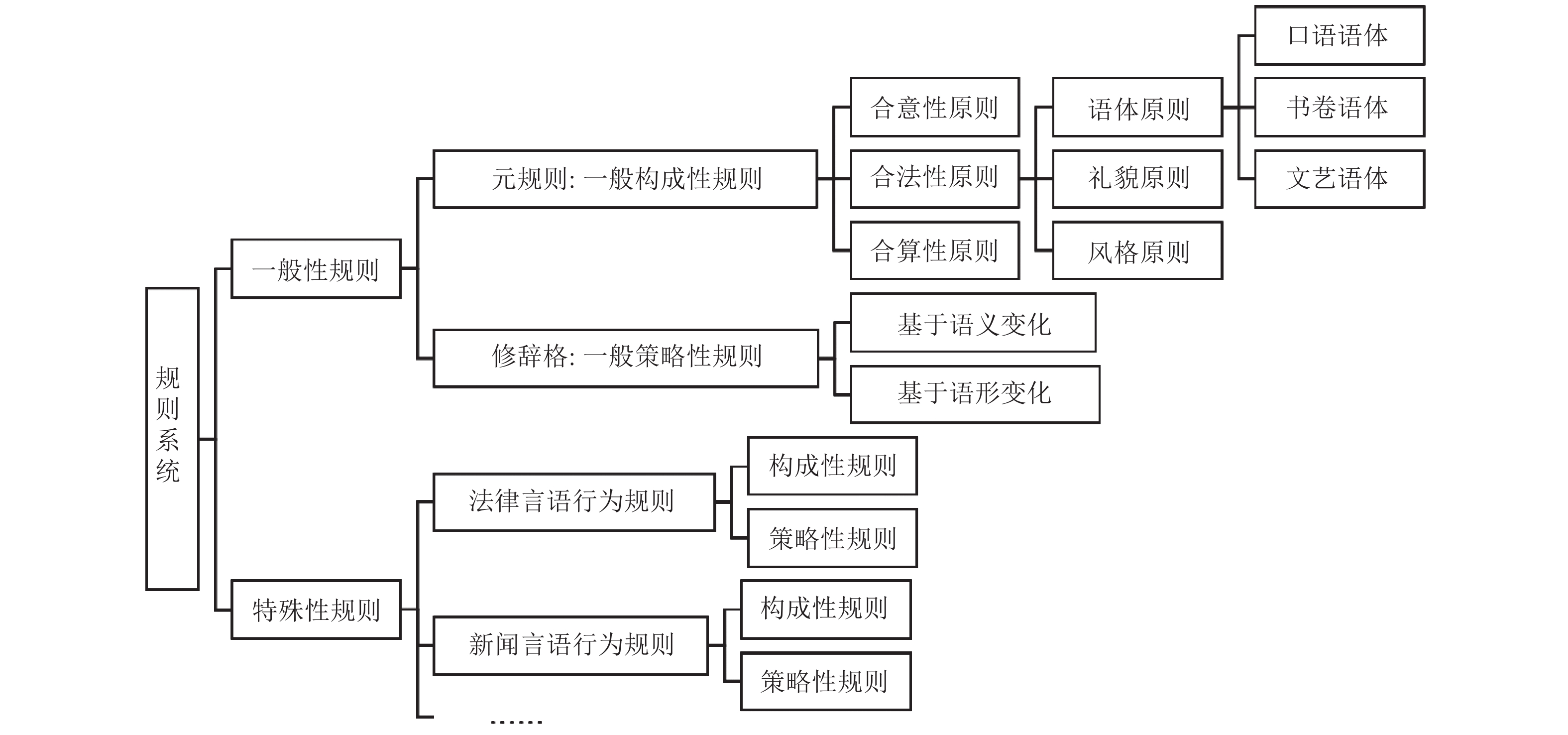
既有的语言运用研究范式很少讨论“规则系统”。根据“新言语行为分析”理论,所谓言语行为就是以交换语言信息的方式实现自己意图的一种游戏,由此便需要认识到:第一,任何游戏都有一定的规则,为了有效地实现言语意图,就必须遵循一系列规则,“规则”是言语行为分析不可忽视的基本范畴之一;第二,言语行为的规则是系统性的,其中既有所有言语行为都需遵守的“一般性规则”和特殊语域才具有的“特殊性规则”,也有强制性的“构成性规则”和选择性的“策略性规则”;第三,“一般性言语行为的构成性规则”(亦即“元规则”)传统以为就是“得体原则”,其实不然,而应是“合意性原则”“合法性原则”“合算性原则”,其中,“合意性”(即合乎说话人的意图)是语言运用的第一原则,而“语体”则属于“合法性原则”制约下的范畴;第四,“修辞格”不应成为修辞学的中心范畴,而应作为“一般性言语行为的策略性规则”的一种形式加以考察;第五,“政治言语行为”“新闻言语行为”“法律言语行为”“二语教学言语行为”等特殊语域言语行为研究的重点不应是考察其“风格”“技巧”,而是首先需要关注这一言语行为的“构成性规则”。

关键词: 新言语行为分析, 元规则, 构成性规则, 策略性规则, 修辞格, 语体

Abstract:

Existing paradigms of language use research seldom discuss “rule systems”. According to the theory of “new speech act analysis”, a speech act is essentially a game in which individuals achieve their intentions by exchanging linguistic information. This implies the need to recognize the following five aspects about rules. First, any game operates under certain rules. To effectively realize speech intentions, a series of rules must be followed. “Rules” are thus one of the fundamental categories that cannot be overlooked in speech act analysis. Second, the rules governing speech acts are systematic. They include “general rules” applicable to all speech acts and “specific rules” unique to particular domains, as well as mandatory “constitutive rules” and optional “strategic rules”. Third, the “constitutive rules of general speech acts” (i.e., “meta-rules”) have traditionally been misidentified as the “principle of appropriateness”. In fact, the meta-rules should be the “principle of intention”, the “principle of legitimacy”, and the “principle of cost-effectiveness”. Among these, the “principle of intention” (i.e., conforming to the speaker’s intention) is the primary one of language use, while “genre” falls under the category governed by the “principle of legitimacy”. Fourth, “rhetorical devices” should not be the central focus of rhetoric but should instead be examined as a form of “strategic rules for general speech acts”. Fifth, the focus of research on speech acts in specific domains, such as “political speech acts”, “news speech acts”, “legal speech acts”, and “second language teaching speech acts”, should prioritize investigating their “constitutive rules” rather than focusing merely on their “styles” or “techniques”.

Key words: new speech act analysis, meta-rules, constitutive rules, strategic rules, rhetorical devices, genre