J. East China Norm. Univ. Philos. Soc. Sci ›› 2025, Vol. 57 ›› Issue (5): 90-104.doi: 10.16382/j.cnki.1000-5579.2025.05.008
Previous Articles Next Articles
Fanzhu Hu
Online:
Published:
Abstract:
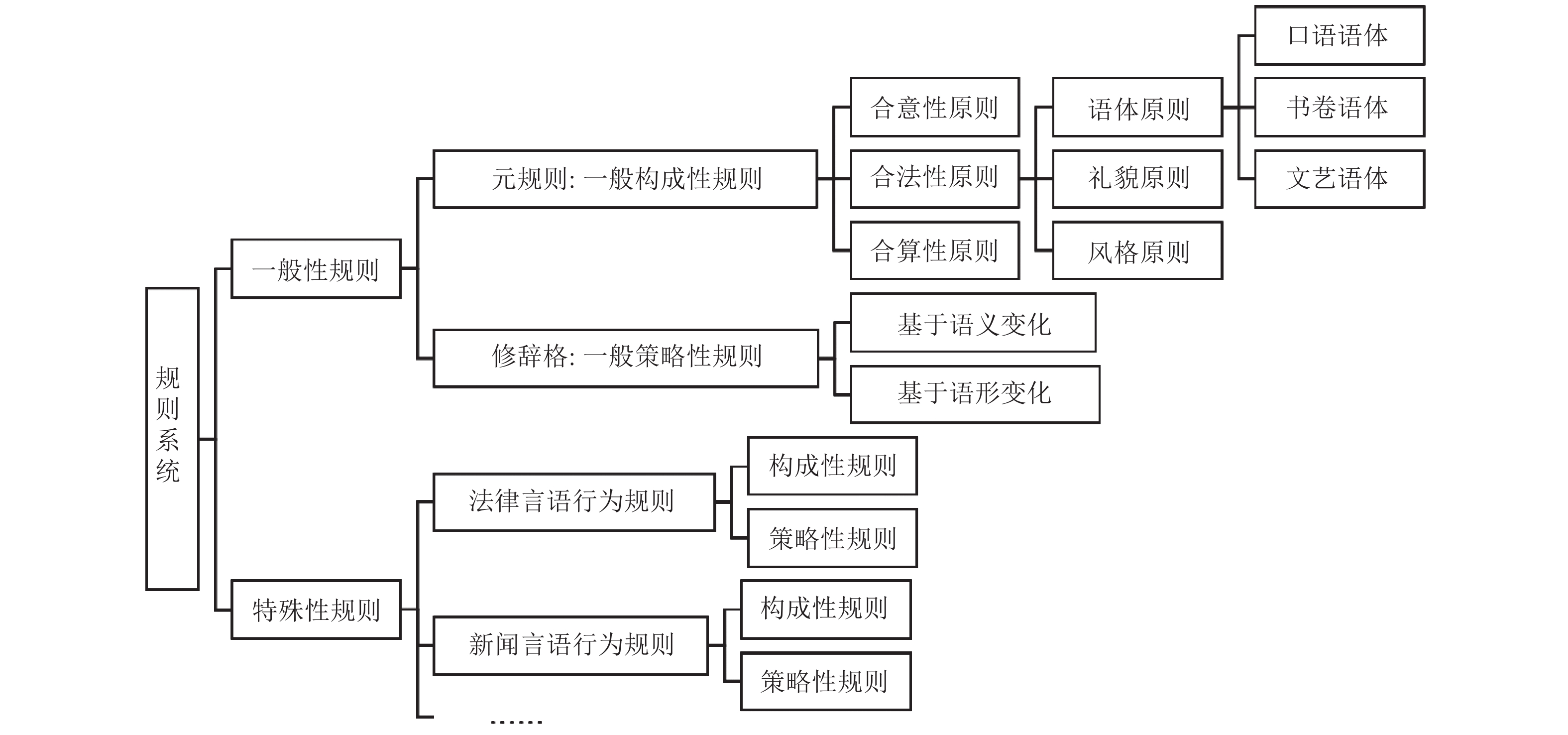
Existing paradigms of language use research seldom discuss “rule systems”. According to the theory of “new speech act analysis”, a speech act is essentially a game in which individuals achieve their intentions by exchanging linguistic information. This implies the need to recognize the following five aspects about rules. First, any game operates under certain rules. To effectively realize speech intentions, a series of rules must be followed. “Rules” are thus one of the fundamental categories that cannot be overlooked in speech act analysis. Second, the rules governing speech acts are systematic. They include “general rules” applicable to all speech acts and “specific rules” unique to particular domains, as well as mandatory “constitutive rules” and optional “strategic rules”. Third, the “constitutive rules of general speech acts” (i.e., “meta-rules”) have traditionally been misidentified as the “principle of appropriateness”. In fact, the meta-rules should be the “principle of intention”, the “principle of legitimacy”, and the “principle of cost-effectiveness”. Among these, the “principle of intention” (i.e., conforming to the speaker’s intention) is the primary one of language use, while “genre” falls under the category governed by the “principle of legitimacy”. Fourth, “rhetorical devices” should not be the central focus of rhetoric but should instead be examined as a form of “strategic rules for general speech acts”. Fifth, the focus of research on speech acts in specific domains, such as “political speech acts”, “news speech acts”, “legal speech acts”, and “second language teaching speech acts”, should prioritize investigating their “constitutive rules” rather than focusing merely on their “styles” or “techniques”.
Key words: new speech act analysis, meta-rules, constitutive rules, strategic rules, rhetorical devices, genre
Fanzhu Hu. Meta-Rules:An Important Category in the New Speech Act Analysis[J]. J. East China Norm. Univ. Philos. Soc. Sci, 2025, 57(5): 90-104.
0 / / Recommend
Add to citation manager EndNote|Reference Manager|ProCite|BibTeX|RefWorks
URL: https://xbzs.ecnu.edu.cn/EN/10.16382/j.cnki.1000-5579.2025.05.008
https://xbzs.ecnu.edu.cn/EN/Y2025/V57/I5/90
"

 国家社会科学基金学术期刊资助入选期刊