J. East China Norm. Univ. Philos. Soc. Sci ›› 2025, Vol. 57 ›› Issue (3): 74-86.doi: 10.16382/j.cnki.1000-5579.2025.03.008
Previous Articles Next Articles
Na Zhang
Accepted:
Online:
Published:
Abstract:
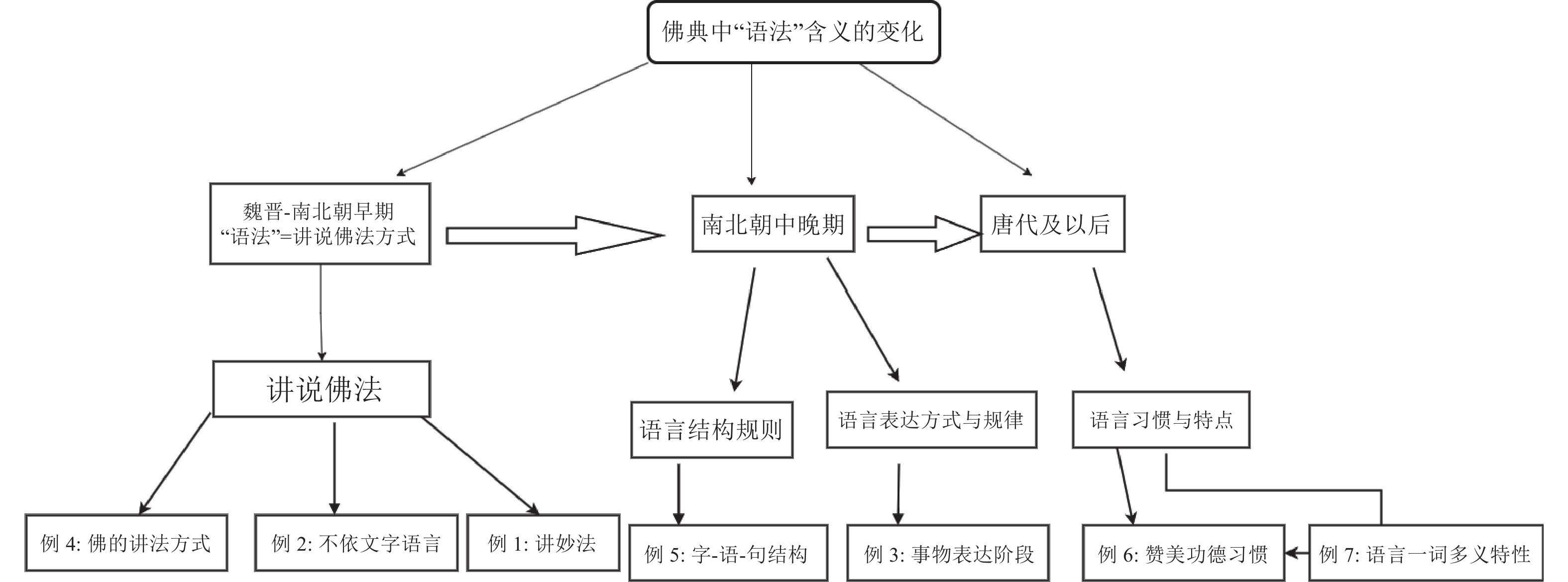
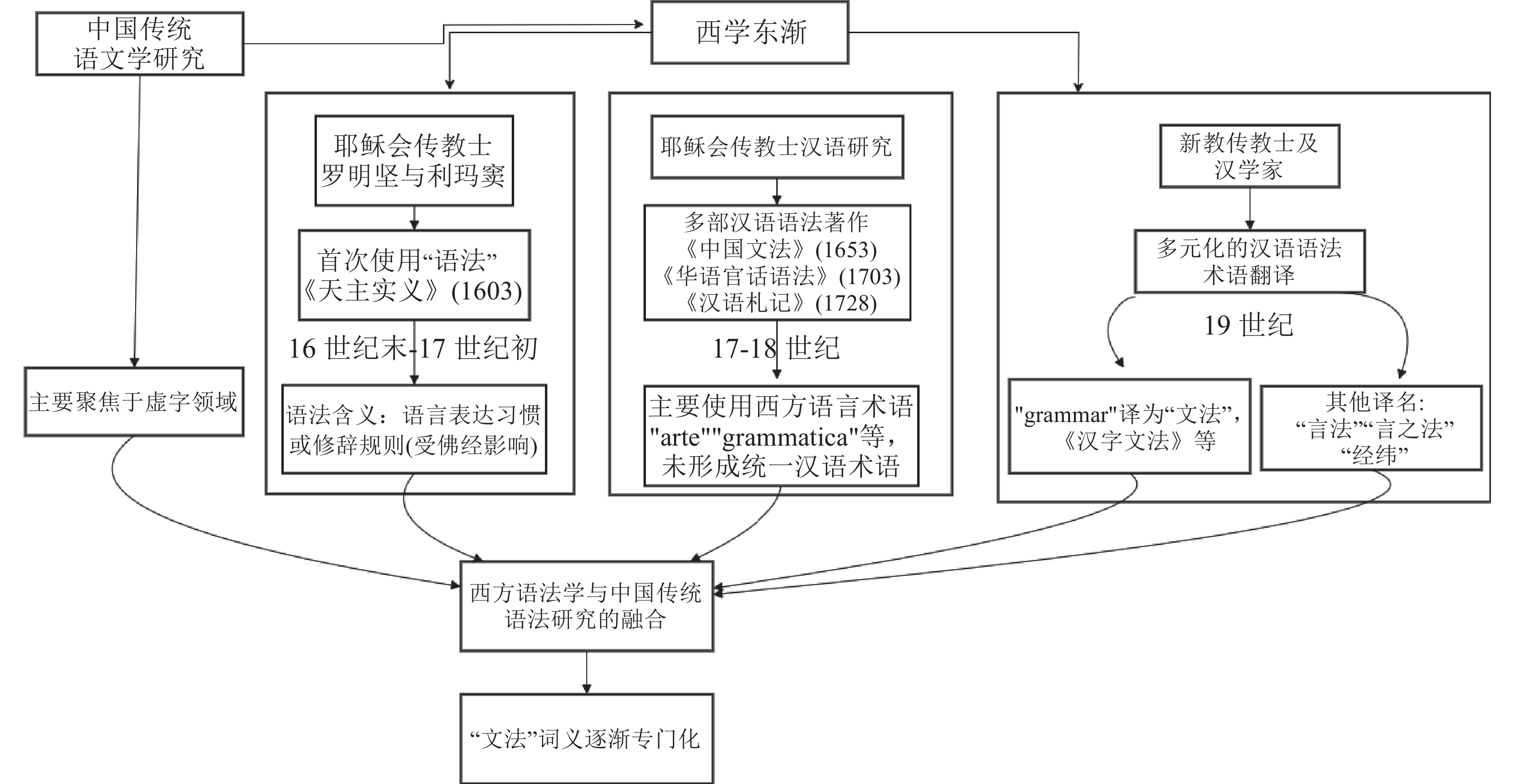
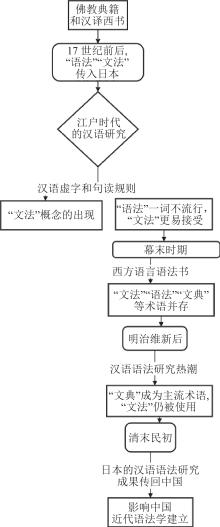
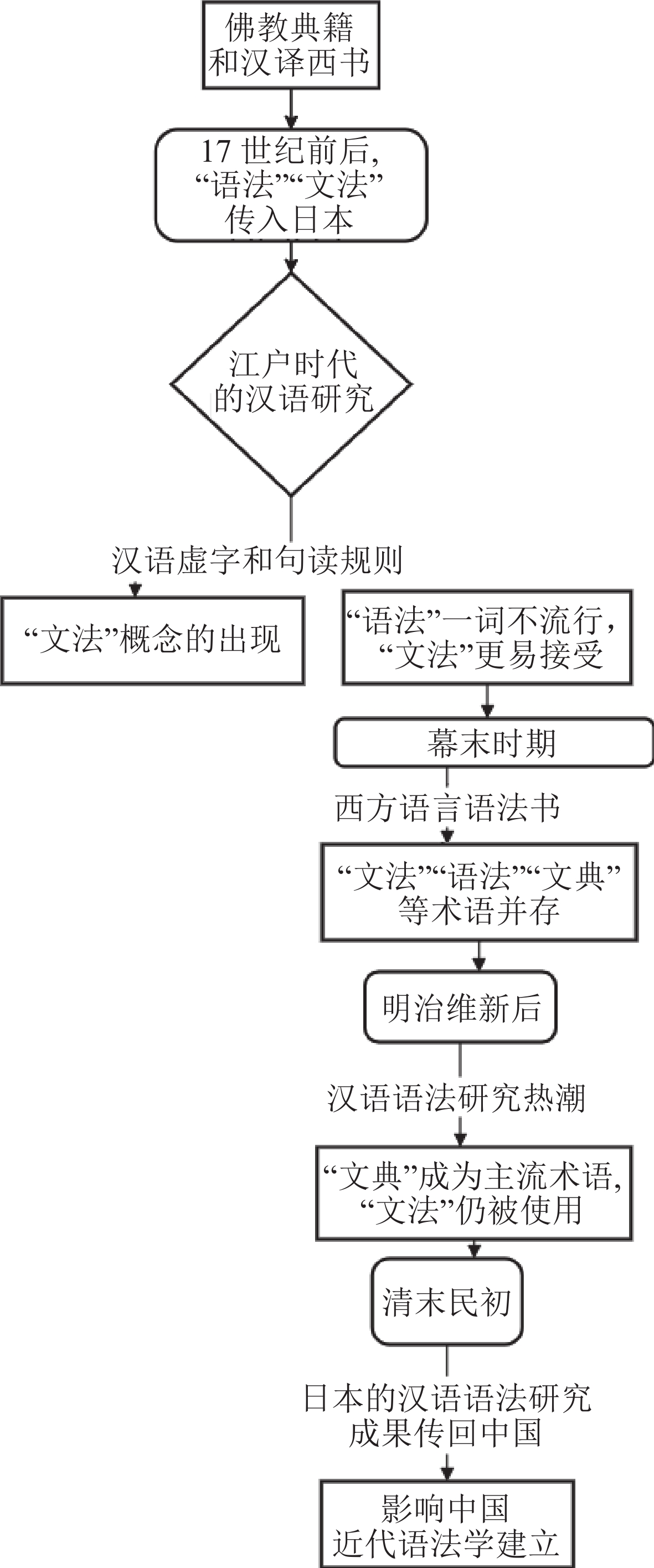
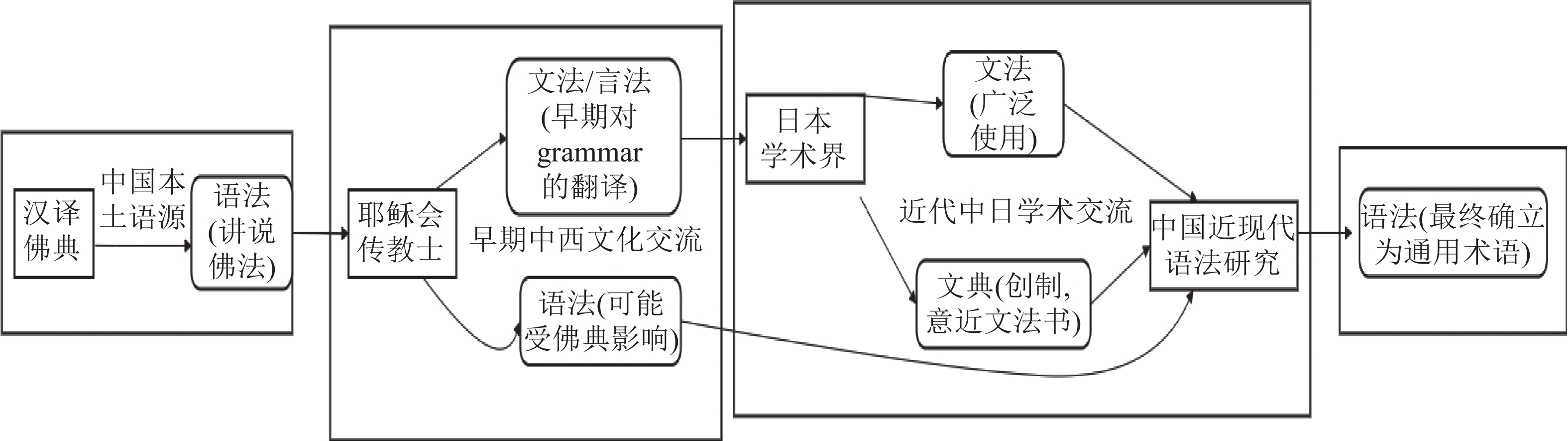
The generation and evolution of the Chinese term “yufa” (grammar) not only represents the transformation process of linguistic terminology but also reflects the complex mechanism of East-West cultural exchange and the interaction between foreign and indigenous knowledge systems. This paper, adopting perspectives of historical linguistics and conceptual history, examines the historical journey of the term “yufa” consisting of its initial emergence in Chinese translations of Buddhist classics, the mediating roles of Western missionaries and sinologists, Japanese academia’s secondary processing and dissemination, and its final establishment in Chinese linguistics with its modern significance in the 20th century. The establishment of the term “yufa” underwent a cross-cultural transformation from rhetorical norms to language structural rules; meanwhile, Japanese sinology, serving as a bridge, accelerated the evolution of this term and significantly influenced the development direction of indigenous Chinese linguistics. This paper, for the first time, completely outlines the evolutionary path of this term, providing a new perspective for research in the conceptual history of linguistics. It also offers a case study for comprehensively understanding the knowledge genealogy behind terminological evolution and how cultural exchange has shaped modern academic discourse systems.
Key words: “yufa”, terminology, generation, conceptual history
Na Zhang. The Generation and Evolution of the Chinese Term “Yufa” (Grammar) in East-West Cultural Exchange[J]. J. East China Norm. Univ. Philos. Soc. Sci, 2025, 57(3): 74-86.
/ / Recommend
Add to citation manager EndNote|Reference Manager|ProCite|BibTeX|RefWorks
URL: https://xbzs.ecnu.edu.cn/EN/10.16382/j.cnki.1000-5579.2025.03.008
https://xbzs.ecnu.edu.cn/EN/Y2025/V57/I3/74
"

 国家社会科学基金学术期刊资助入选期刊