
 国家社会科学基金学术期刊资助入选期刊
J. East China Norm. Univ. Philos. Soc. Sci ›› 2026, Vol. 58 ›› Issue (4): 163-181.doi: 10.16382/j.cnki.1000-5579.2026.04.014
Shuijun Peng, Peng An, Ying Fang
Accepted:2026-06-17
Online:2026-07-15
Published:2026-08-03
Shuijun Peng, Peng An, Ying Fang. Development of Digital Economy,Division of Occupational Skills and Wage Growth:Based on A “Task Transaction” Team Production Model[J]. J. East China Norm. Univ. Philos. Soc. Sci, 2026, 58(4): 163-181.
"
| (1) | (2) | (3) | |
| wage | wage | wage | |
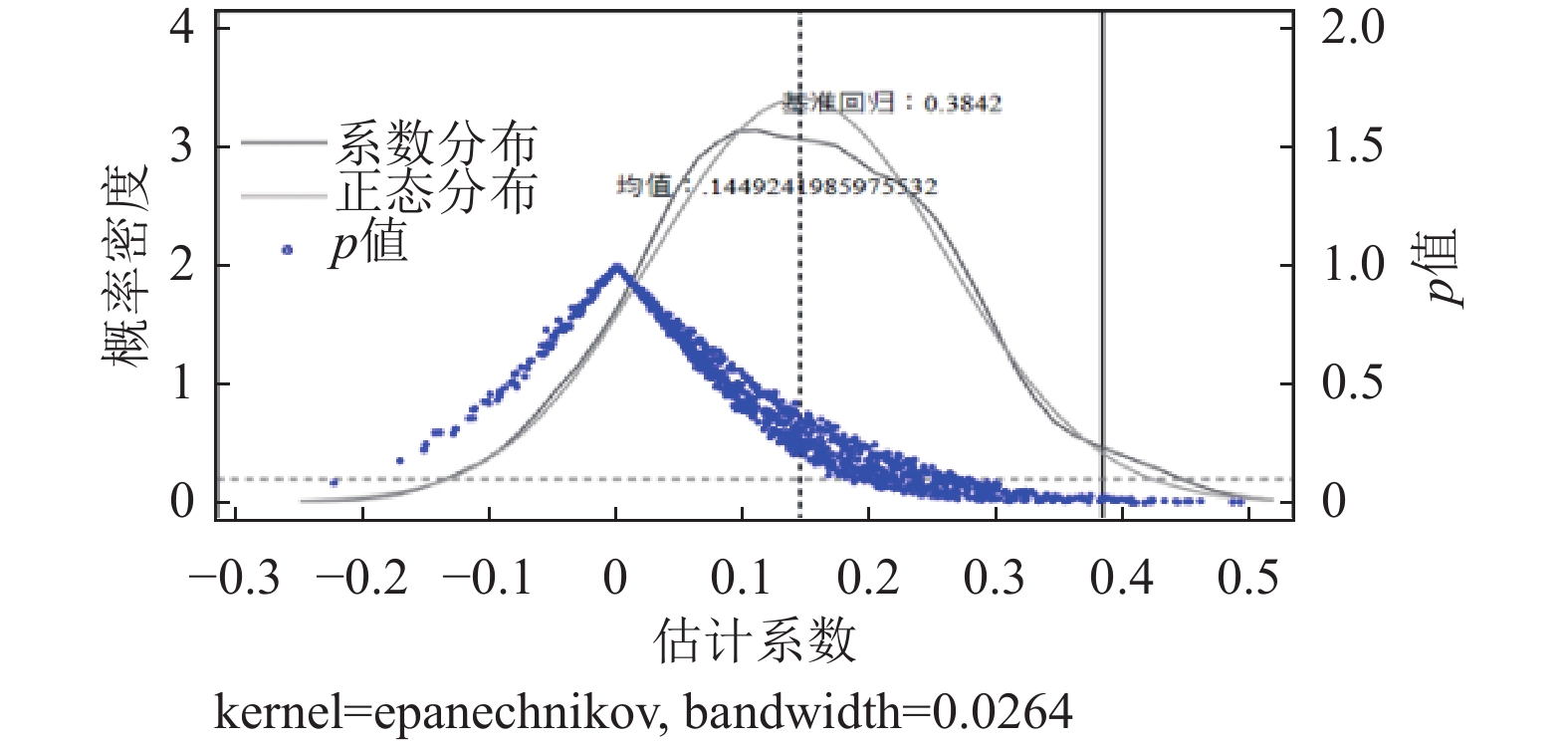
| treat × post | 0.410 0***(4.066 7) | 0.411 7***(4.098 9) | 0.384 2***(3.823 8) |
| 个体层面控制变量 | 否 | 是 | 是 |
| 城市层面控制变量 | 否 | 否 | 是 |
| 个体固定效应 | 是 | 是 | 是 |
| 年份固定效应 | 是 | 是 | 是 |
| 样本量 | 17 960 | 17 960 | 17 960 |
| R2 | 0.588 2 | 0.588 5 | 0.589 2 |
"
"
| (1) | (2) | (3) | |
| wage | wage | wage | |
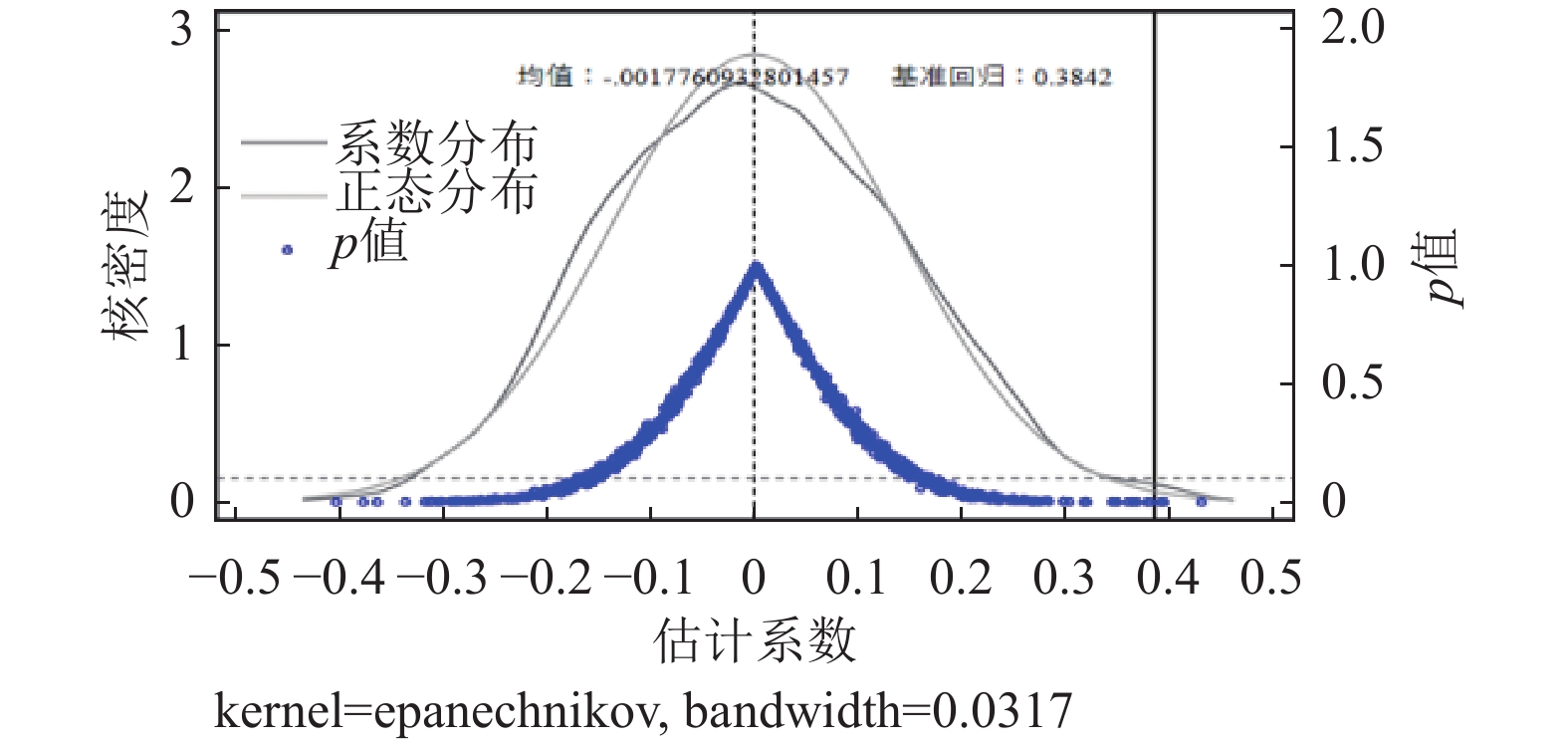
| treat × pseudo_post | 0.001 1(0.008 8) | 0.026 1(0.325 0) | 0.024 4(0.321 7) |
| 样本量 | 6 854 | 6 854 | 6 854 |
| R2 | 0.699 4 | 0.699 4 | 0.699 4 |
"
"
"
| (1) | (2) | |
| wage | wage | |
| treat × post | 0.282 8***(2.672 4) | |
| 样本量 | 16 173 | 14 666 |
| R2 | 0.590 6 | 0.584 9 |
"
| (1) | (2) | (3) | |
| treat × post | wage | wage | |
| treat × post | 0.276 9**(2.016 9) | 1.148 3***(2.722 5) | |
| IV | −0.033 0***(−7.572 6) | −0.030 1*(−1.712 8) | |
| 个体层面控制变量 | 否 | 是 | 是 |
| 城市层面控制变量 | 是 | 是 | 是 |
| 个体固定效应 | 否 | 是 | 是 |
| 地区固定效应 | 是 | 否 | 否 |
| 年份固定效应 | 是 | 是 | 是 |
| 样本量 | 603 | 17 674 | 17 674 |
| 第一阶段F统计量 | 771.882 | ||
"
| (1) | (2) | (3) | (4) | (5) | |
| wage | wage | wage | wage | wage | |
| treat × post | 0.284 3** | 0.384 2** | 0.452 3*** | 0.383 3** | 0.430 2*** |
| (2.053 6) | (2.375 1) | (2.779 5) | (2.364 1) | (5.258 4) | |
| 样本量 | 7 409 | 17 960 | 16 420 | 17 960 | 28 214 |
| R2 | 0.622 1 | 0.589 2 | 0.581 4 | 0.589 2 | 0.604 8 |
"
| (1) | (2) | (3) | (4) | |
| wage | wage | wage | wage | |
| treat × post × nonroutine_if | 0.875 5***(5.082 9) | |||
| treat × post × nonroutine_score | 0.079 6***(4.070 0) | |||
| treat × post × routine_if | −0.489 8***(−2.999 2) | |||
| treat × post × routine_score | −0.111 8***(−3.887 1) | |||
| treat × post | −0.087 9(−0.813 4) | −0.068 3(−0.539 5) | 0.420 5***(3.682 0) | 0.669 7***(4.049 4) |
| 样本量 | 13 668 | 13 650 | 13 668 | 13 650 |
| R2 | 0.663 5 | 0.663 1 | 0.663 4 | 0.663 3 |
"
| (1) | (2) | |
| wage | wage | |
| treat × post × cognition_t | 0.198 8**(2.389 4) | |
| treat × post × cognition_t0 | 0.302 5***(3.390 9) | |
| treat × post | 0.023 6(0.185 8) | 0.211 0**(2.046 3) |
| 样本量 | 7 813 | 12 552 |
| R2 | 0.662 2 | 0.655 8 |
"
| (1) | (2) | (3) | |
| IC | SAE | LP | |
| digit | 4.064 0***(2.881 3) | −0.001 7**(−1.960 9) | 0.017 3**(2.218 8) |
| 控制变量 | 是 | 是 | 是 |
| 样本量 | 28 037 | 28 037 | 31 101 |
| R2 | 0.479 3 | 0.836 3 | 0.831 9 |
"
| (1) | (2) | (3) | (4) | |
| Δnonroutine_demand | Δnonroutine_demand | Δroutine_demand | Δroutine_demand | |
| digitf,t−1 | 0.732 5**(1.971 7) | 0.687 4*(1.884 7) | 0.247 7*(1.850 5) | 0.222 4*(1.655 7) |
| 控制变量 | 否 | 是 | 否 | 是 |
| 样本量 | 11 579 | 11 579 | 11 579 | 11 579 |
| R2 | 0.318 2 | 0.349 2 | 0.446 2 | 0.472 5 |
| 白俊红、王星媛、卞元超, 2022, 《互联网发展对要素配置扭曲的影响》 , 《数量经济技术经济研究》 第11期, 第71—90页. | |
| 方福前、田鸽、张勋, 2023, 《数字基础设施与代际收入向上流动性——基于“宽带中国”战略的准自然实验》 , 《经济研究》 第5期, 第79—97页. | |
| 洪俊杰、李研、杨曦, 2024, 《数字经济与收入差距: 数字经济核心产业的视角》 , 《经济研究》 第5期, 第116—131页. | |
| 胡涟漪、盖庆恩、朱喜、郭士祺, 2024, 《中国职业技能结构转型: 任务内容的视角》 , 《经济研究》 第1期, 第188—207页. | |
| 焦豪、崔瑜、张亚敏, 2023, 《数字基础设施建设与城市高技能创业人才吸引》 , 《经济研究》 第12期, 第150—166页. | |
| 李兆睿、许志伟, 2024, 《数据、生产与宏观经济——一个具有企业数字化的一般均衡理论》 , 《管理世界》 第9期, 第80—101页. | |
| 倪骁然、张宸瑞, 2025, 《数字化转型与企业资本配置效率》 , 《统计研究》 第2期, 第43—57页. | |
| 牛子恒、崔宝玉, 2022, 《网络基础设施建设与劳动力配置扭曲——来自“宽带中国”战略的准自然实验》 , 《统计研究》 第10期, 第133—148页. | |
| 戚聿东、刘翠花、丁述磊, 2020, 《数字经济发展、就业结构优化与就业质量提升》 , 《经济学动态》 第11期, 第17—35页. | |
| 田鸽, 2024, 《数字基础设施能否缩小社会经济地位的性别差距》 , 《世界经济》 第10期, 第221—248页. | |
| 田鸽、张勋, 2022, 《数字经济、非农就业与社会分工》 , 《管理世界》 第5期, 第72—84+311页. | |
| 王林辉、钱圆圆、周慧琳、董直庆, 2023, 《人工智能技术冲击和中国职业变迁方向》 , 《管理世界》 第11期, 第74—95页. | |
| 王林辉、周慧琳、钱圆圆、董直庆, 2024, 《机器人应用冲击、职业可迁移技能和职业—技能合意性》 , 《管理世界》 第11期, 第85—104页. | |
| 王孝松、王艳艳、余紫菱, 2025, 《劳动力供需、中间品进口与“双循环”格局构建》 , 《经济理论与经济管理》 第1期, 第73—92页. | |
| 王永钦、董雯, 2023, 《中国劳动力市场结构变迁——基于任务偏向型技术进步的视角》 , 《中国社会科学》 第11期, 第45—64+205页. | |
| 魏宏冰、李贺、马弘, 2025, 《工业机器人与结构性就业变化: 职业和任务的视角》 , 《世界经济》 第4期, 第144—169页. | |
| 吴非、胡慧芷、林慧妍、任晓怡, 2021, 《企业数字化转型与资本市场表现——来自股票流动性的经验证据》 , 《管理世界》 第7期, 第130—144+10页. | |
| 巫强、姚雨秀, 2023, 《企业数字化转型与供应链配置: 集中化还是多元化》 , 《中国工业经济》 第8期, 第99—117页. | |
| 肖土盛、孙瑞琦、袁淳、孙健, 2022, 《企业数字化转型、人力资本结构调整与劳动收入份额》 , 《管理世界》 第12期, 第220—237页. | |
| 闫雪凌、朱博楷、马超, 2020, 《工业机器人使用与制造业就业: 来自中国的证据》 , 《统计研究》 第1期, 第74—87页. | |
| 姚加权、张锟澎、郭李鹏、冯绪, 2024, 《人工智能如何提升企业生产效率?——基于劳动力技能结构调整的视角》 , 《管理世界》 第2期, 第101—116+133页. | |
| 叶永卫、李鑫、刘贯春, 2022, 《数字化转型与企业人力资本升级》 , 《金融研究》 第12期, 第74—92页. | |
| 周冬华、万贻健, 2023, 《企业数字化能提升企业全要素生产率吗?》 , 《统计研究》 第12期, 第106—118页. | |
| Acemoglu, D. and Autor, D. , 2011, “Skills. Tasks and Technologies: Implications for Employment and Earnings”, Handbook of Labor Economics, Vol. 4: 1 043-1 171. | |
| Acemoglu, D. and Restrepo, P. , 2018, “The Race between Man and Machine: Implications of Technology for Growth, Factor Shares, and Employment”, American Economic Review, Vol. 108, No. 6: 1 488-1 542. | |
| Arntz, M. , Gregory, T. and Zierahn, U. , 2016, “The Risk of Automation for Jobs in OECD Countries: A Comparative Analysis”, Employment and Migration Working Papers, No. 189. | |
| Autor, D. H. , Levy, F. and Murnane, R. J. , 2003, “The Skill Content of Recent Technological Change: An Empirical Exploration”, The Quarterly Journal of Economics, Vol. 118, No. 4: 1 279-1 333. | |
| Cheng, Z. and Chen, X. , 2024, “Cognitive Ability, the Big Five, and Rural-to-Urban Migration in China”, China Economic Review, Vol. 84: 102 126. | |
| Deming, D. J. , 2017, “The Growing Importance of Social Skills in the Labor Market”, The Quarterly Journal of Economics, Vol. 132, No. 4: 1 593-1 640. | |
| Eaton, J. and Kortum, S. , 2002, “Technology, Geography, and Trade”, Econometrica, Vol. 70, No. 5: 1 741-1 779. | |
| Frey, C. B. and Osborne, M. A. , 2017, “The Future of Employment: How Susceptible Are Jobs to Computerisation?” Technological Forecasting and Social Change, Vol. 114: 254-280. | |
| Hémous, D. and Olsen, M. , 2022, “The Rise of the Machines: Automation, Horizontal Innovation and Income Inequality”, American Economic Journal: Macroeconomics, Vol. 14, No. 1: 179-223. | |
| Mariscal, A. , 2018, “Firm Organization and Information Technology: Micro and Macro Implications”, Society for Economic Dynamics, 2018 Meeting Papers, No. 1 076. | |
| Shen, G. , Shen, B. and Wu, R. , 2025, “Internetization, Supplier Search, and Diversification of Global Supply Chains”, European Economic Review, Vol. 172: 104 951. |
| [1] | Yan Hu, Mingyu Li, Rui Tang. Digital Economy and Vertical Specialization Division of Labor between Enterprises:Empirical Evidence Based on the Yangtze River Delta [J]. Journal of East China Normal University (Philosophy and Social Sciences), 2024, 56(1): 146-160. |
| [2] | Yan HU, Yu-qi CHEN, Yan LI. The Impact of Digital Economy on Urban Economic Resilience in the Yangtze River Delta Region [J]. Journal of East China Normal University (Philosophy and Social Sciences), 2022, 54(1): 143-154. |
| [3] | Nan-ping YU. The Shaping and Transformation of the “Axial Age” of the Global Digital Economic Value Chain [J]. Journal of East China Normal University (Philosophy and Social Sciences), 2021, 53(4): 124-135. |
| Viewed | ||||||
|
Full text |
|
|||||
|
Abstract |
|
|||||
