
 国家社会科学基金学术期刊资助入选期刊
华东师范大学学报(哲学社会科学版) ›› 2026, Vol. 58 ›› Issue (4): 146-162.doi: 10.16382/j.cnki.1000-5579.2026.04.013
• 中国式现代化:高质量发展研究 • 上一篇
韩剑, 周临风, 郑航
接受日期:2026-06-17
出版日期:2026-07-15
发布日期:2026-08-03
作者简介:韩剑,南京大学商学院教授(南京,210093)基金资助:Jian Han, Linfeng Zhou, Hang Zheng
Accepted:2026-06-17
Online:2026-07-15
Published:2026-08-03
摘要:
在全球供应链不确定性持续加剧的背景下,以深化制度型开放增强供应链韧性,已成为推动我国经济高质量发展的重要战略路径。本文基于2010—2024年A股上市公司样本数据,构建供应链韧性综合指标体系,以跨境电商综试区政策实施为例,采用准自然实验方法实证考察跨境电商制度创新对企业供应链韧性的影响及其作用机制。研究结果表明,跨境电商政策显著提升了企业供应链韧性,其政策效应主要通过促进贸易便利化、推动数字化转型与缓解融资约束三条路径实现。异质性分析显示,跨境电商政策对供应链韧性的促进效应对沿海地区、非国家数字服务出口基地、第二产业以及非国有企业等更为突出。进一步研究发现,该政策主要通过增强企业的恢复能力、抵抗能力与协同能力来发挥作用。本文结论为深化跨境电商制度改革、提升企业国际竞争力提供了重要的政策启示。
韩剑, 周临风, 郑航. 制度型开放视角下跨境电商制度创新对企业供应链韧性的影响研究[J]. 华东师范大学学报(哲学社会科学版), 2026, 58(4): 146-162.
Jian Han, Linfeng Zhou, Hang Zheng. The Impact of Institutional Innovation in Cross-Border E-Commerce on Enterprise Supply Chain Resilience:From the Perspective of Institutional Opening-up[J]. J. East China Norm. Univ. Philos. Soc. Sci, 2026, 58(4): 146-162.

表 1
企业供应链韧性指标体系"
| 一级指标 | 二级指标 | 具体计算方式 |
| 供应链恢复能力(Recov) | 存货周转率 | 营业成本/存货平均占用额 |
| 净资产收益率 | 净利润/股东权益平均余额 | |
| 供应链抵抗能力(Resis) | 短期偿债能力 | 经营现金流净额/流动负债 |
| 应收账款周转率 | 营业收入/应收账款平均占用额的余额 | |
| 利息保障倍数 | 息税前利润/利息费用 | |
| 供应链协同能力(Cooper) | 供应商集中度 | 前五大供应商采购额/年度总采购额 |
| 客户集中度 | 前五大客户销售额/年度总销售额 | |
| 供应链创新能力(Innov) | 研发能力 | 研发投入/营业收入 |
| 人工智能投资水平 | 人工智能资产/资产总额 | |
| 供应链资源配置能力(Redund) | 沉淀性冗余资源 | (管理费用+销售费用)/营业收入 |
表 2
描述性统计"
| 变量 | 观测值 | 均值 | 标准差 | 最小值 | 最大值 |
| Chain | 52 320 | 0.126 | 0.071 | 0 | 0.681 |
| Post×Group | 52 320 | 0.557 | 0.497 | 0 | 1.000 |
| Group | 52 320 | 0.051 | 0.219 | 0 | 1.000 |
| Post | 52 320 | 0.413 | 0.492 | 0 | 1.000 |
| leverage | 52 320 | 1.304 | 0.908 | 0 | 7.099 |
| ALR | 52 320 | 0.421 | 0.200 | 0.059 | 0.915 |
| tobinq | 52 320 | 2.541 | 1.713 | 0.832 | 10.501 |
| manage | 52 320 | 0.429 | 0.495 | 0 | 1.000 |
| share | 52 320 | 60.107 | 16.006 | 23.400 | 98.000 |
| size | 52 320 | 22.080 | 1.364 | 19.049 | 26.252 |
表 3
基准回归结果"
| (1) | (2) | (3) | (4) | |
| Chain | Chain | Chain | Chain | |
| Post×Group | 0.005(0.003) | 0.004(0.003) | 0.008**(0.003) | 0.007**(0.003) |
| Post | 0.051***(0.004) | 0.041***(0.003) | 0.007***(0.002) | 0.006***(0.002) |
| 常数项 | 0.129***(0.001) | 0.001(0.024) | 0.124***(0.001) | 0.489***(0.069) |
| 观测值 | 52 275 | 52 275 | 52 275 | 52 275 |
| 调整R2 | 0.119 | 0.228 | 0.579 | 0.620 |
| 年份固定 | No | No | Yes | Yes |
| 企业固定 | No | No | Yes | Yes |
| 控制变量 | No | Yes | No | Yes |
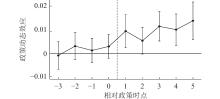
图 1
平行趋势检验"
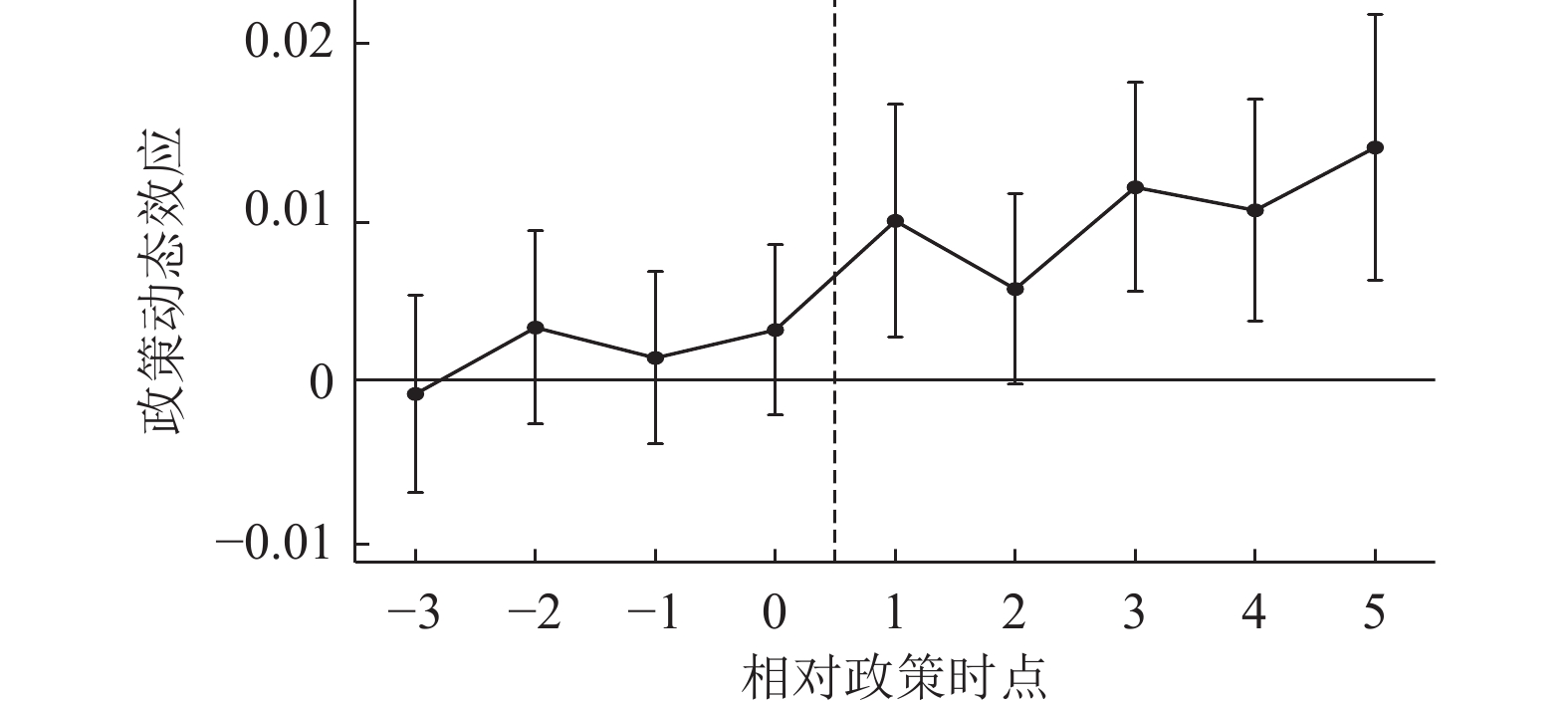
表 4
工具变量法检验结果"
| (1) | (2) | |
| Post×Group | Chain | |
| IV | −0.009***(−4.285) | |
| Post×Group | 0.483*** (5.611) | |
| 观测值 | 52 065 | 52 065 |
| 控制变量 | Yes | Yes |
| KP rk Wald F统计量 | 18.361 |
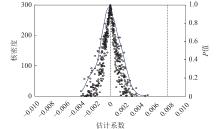
图 2
安慰剂检验 注:图中右边垂直线为实际估计系数。"
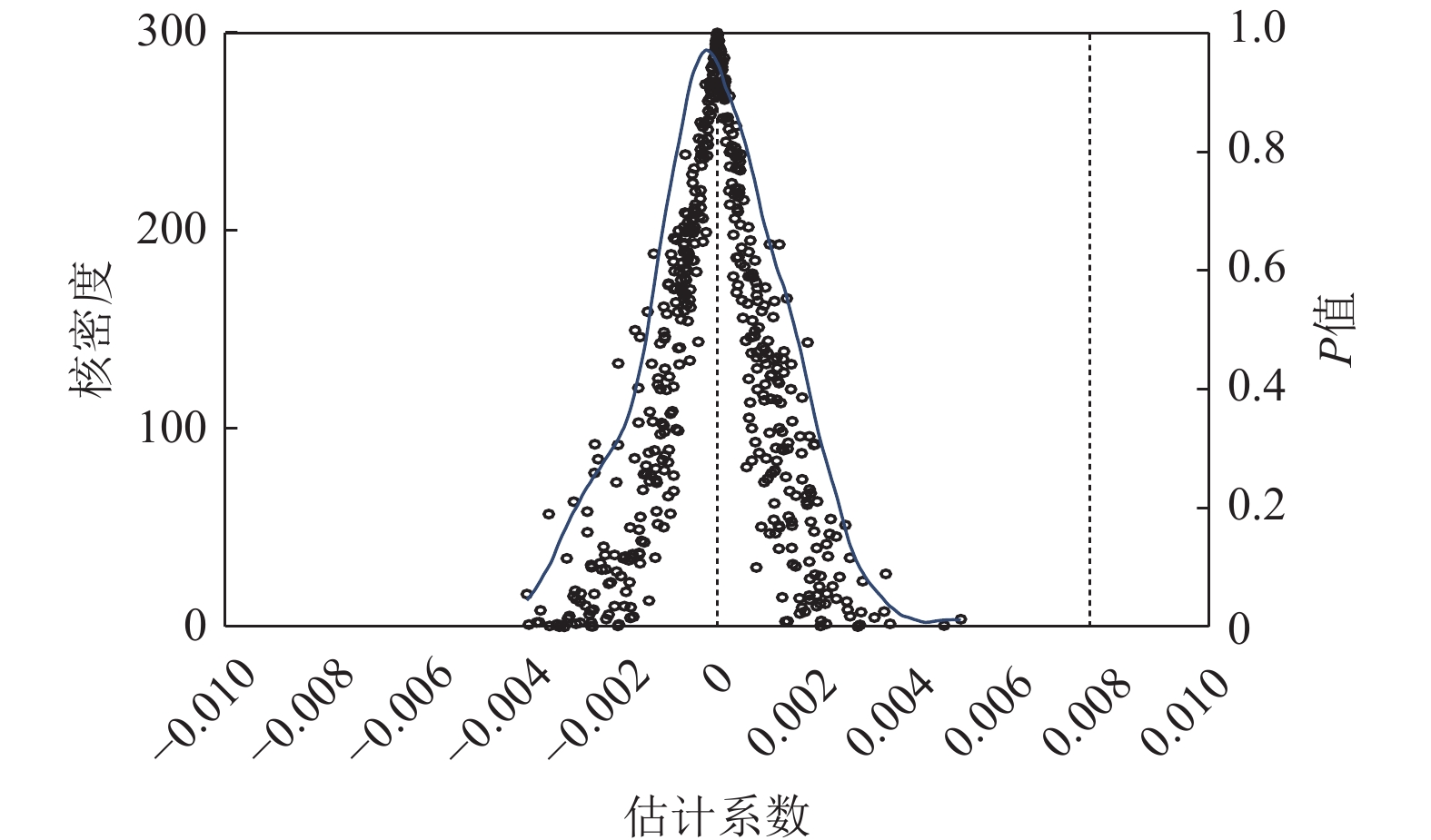
图 3
匹配前和匹配后的核密度图"
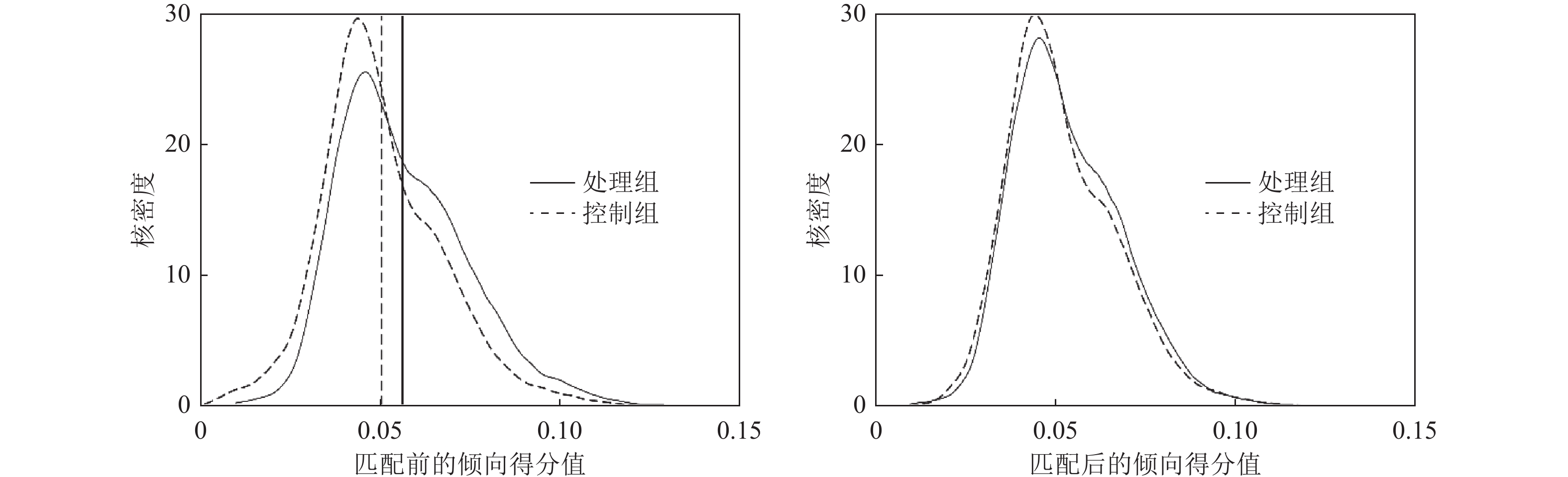
表 5
稳健性检验结果"
| (1) | (2) | (3) | (4) | (5) | (6) | |
| Chain | Chain | Chain | Chain | Chain | Chain | |
| Post×Group | 0.006(0.003) | 0.005*(0.003) | 0.007*(0.004) | 0.007*(0.004) | 0.008**(0.003) | 0.006**(0.003) |
| Post | −0.001(0.006) | −0.003(0.004) | 0.006***(0.001) | 0.006***(0.001) | 0.007***(0.002) | 0.007***(0.002) |
| 常数项 | 0.124***( | 0.757***(0.058) | 0.488***(0.029) | 0.488***(0.027) | 0.122***(0.001) | 0.486***(0.068) |
| 聚类层级 | 行业 | 行业 | 城市 | 企业 | 行业 | 行业 |
| 观测值 | 50 818 | 50 818 | 52 320 | 52 320 | 48 790 | 48 790 |
| 调整R2 | 0.620 | 0.687 | 0.619 | 0.619 | 0.582 | 0.622 |
| 控制变量 | No | Yes | Yes | Yes | No | Yes |
表 6
企业位置层面异质效应检验结果"
| (1) | (2) | (3) | (4) | |
| 沿海地区 | 内陆地区 | 国家数字服务出口基地 | 非国家数字服务出口基地 | |
| Chain | Chain | Chain | Chain | |
| Post×Group | 0.007*(0.004) | 0.006(0.004) | 0.013*(0.007) | 0.006***(0.002) |
| Post | 0.003***(0.001) | 0.006**(0.003) | 0.004*(0.002) | 0.006***(0.002) |
| 常数项 | 0.482***(0.116) | 0.492***(0.037) | 0.523***(0.081) | 0.472***(0.075) |
| 观测值 | 23 355 | 28 920 | 17 850 | 34 425 |
| 调整R2 | 0.635 | 0.608 | 0.607 | 0.628 |
| 控制变量 | Yes | Yes | Yes | Yes |
表 7
产业层面异质效应检验结果"
| (1) | (2) | (3) | (4) | |
| 第二产业 | 第三产业 | 战略性新兴产业 | 非战略性新兴产业 | |
| Chain | Chain | Chain | Chain | |
| Post×Group | 0.006***(0.002) | 0.007(0.007) | 0.011***(0.002) | 0.008**(0.003) |
| Post | 0.006***(0.001) | 0.003(0.002) | 0.004(0.002) | 0.005***(0.002) |
| 常数项 | 0.554***(0.011) | 0.399***(0.027) | 0.296***(0.073) | 0.515***(0.077) |
| 观测值 | 39 000 | 12 525 | 8 895 | 43 380 |
| 调整R2 | 0.660 | 0.546 | 0.565 | 0.631 |
| 控制变量 | Yes | Yes | Yes | Yes |
表 8
企业性质层面异质效应检验结果"
| (1) | (2) | (3) | (4) | (5) | |
| 国家控股企业 | 非国家控股企业 | 大型企业 | 中型企业 | 小型企业 | |
| Chain | Chain | Chain | Chain | Chain | |
| Post×Group | −0.009**(0.004) | 0.004**(0.002) | 0.005*(0.002) | 0.022**(0.008) | −0.032***(0.005) |
| Post | 0.005***(0.001) | 0.007***(0.001) | 0.006**(0.002) | 0.008***(0.002) | 0.002(0.005) |
| 常数项 | 0.328***(0.018) | 0.511***(0.014) | 0.533***(0.070) | 0.261***(0.067) | −0.142(0.140) |
| 观测值 | 18 000 | 31 095 | 40 410 | 10 335 | 1 530 |
| 调整R2 | 0.572 | 0.659 | 0.615 | 0.622 | 0.513 |
| 控制变量 | Yes | Yes | Yes | Yes | Yes |
表 9
贸易便利化机制检验结果"
| 全样本 | 企业供应链韧性高 | 企业供应链韧性低 | ||||
| (1) | (2) | (3) | (4) | (5) | (6) | |
| AEO | AEO | AEO | AEO | AEO | AEO | |
| Post×Group | 0.086***(0.001) | 0.086***(0.001) | 0.104***(0.001) | 0.103***(0.001) | 0.071***(0.001) | 0.072***(0.001) |
| Post | −0.007***(0.001) | −0.007***(0.001) | −0.005***(0.001) | −0.006***(0.001) | −0.008***(0.001) | −0.008***(0.001) |
| 常数项 | 0.043***(0.000) | −0.211(0.146) | 0.057***(0.001) | −0.318*(0.170) | 0.032***(0.001) | −0.027(0.084) |
| 观测值 | 52 275 | 52 275 | 23 880 | 23 880 | 28 395 | 28 395 |
| 调整R2 | 0.629 | 0.630 | 0.689 | 0.690 | 0.534 | 0.535 |
| 控制变量 | No | Yes | No | Yes | No | Yes |
表 10
数字化转型机制检验结果"
| 全样本 | 企业供应链韧性高 | 企业供应链韧性低 | ||||
| (1) | (2) | (3) | (4) | (5) | (6) | |
| DIG | DIG | DIG | DIG | DIG | DIG | |
| Post×Group | 0.739***(0.185) | 0.661***(0.175) | 0.854**(0.298) | 0.779**(0.289) | 0.204(0.215) | 0.161(0.186) |
| Post | 0.624***(0.104) | 0.555***(0.100) | 0.704***(0.203) | 0.661***(0.189) | 0.453***(0.146) | 0.391**(0.145) |
| 常数项 | 36.645***(0.052) | −1.657(4.844) | 38.897***(0.094) | −2.397(6.339) | 34.155***(0.079) | 3.602(2.920) |
| 观测值 | 39 966 | 39 966 | 21 253 | 21 253 | 18 713 | 18 713 |
| 调整R2 | 0.839 | 0.844 | 0.847 | 0.851 | 0.807 | 0.811 |
| 控制变量 | No | Yes | No | Yes | No | Yes |
表 11
融资约束机制检验结果"
| 全样本 | 企业供应链韧性高 | 企业供应链韧性低 | ||||
| (1) | (2) | (3) | (4) | (5) | (6) | |
| SA | SA | SA | SA | SA | SA | |
| Post×Group | −0.010*(0.006) | −0.010*(0.005) | −0.005(0.008) | −0.006(0.008) | −0.021**(0.008) | −0.019**(0.007) |
| Post | 0.004**(0.002) | 0.004**(0.002) | 0.003(0.003) | 0.003(0.003) | 0.005*(0.003) | 0.005(0.003) |
| 常数项 | −3.863***(0.001) | −3.895***(0.005) | −3.856***(0.001) | −3.880***(0.003) | −3.872***(0.001) | −3.909***(0.009) |
| 观测值 | 41 544 | 41 544 | 22 307 | 22 307 | 19 237 | 19 237 |
| 调整R2 | 0.935 | 0.938 | 0.932 | 0.934 | 0.941 | 0.946 |
| 控制变量 | No | Yes | No | Yes | No | Yes |
表 12
解构指标体系的回归结果"
| (1) | (2) | (3) | (4) | (5) | |
| 恢复能力 | 抵抗能力 | 协同能力 | 创新能力 | 资源配置能力 | |
| Post×Group | 0.006***(0.002) | 0.006***(0.002) | 0.017***(0.003) | −0.003(0.002) | 0.006(0.004) |
| Post | 0.005***(0.001) | −0.000(0.001) | 0.006***(0.001) | 0.005***(0.001) | −0.005*(0.002) |
| 常数项 | 0.433***(0.060) | 0.287***(0.022) | 0.585***(0.119) | 0.203***(0.018) | −0.310***(0.058) |
| 观测值 | 52 275 | 52 275 | 52 275 | 52 275 | 42 870 |
| 调整R2 | 0.375 | 0.337 | 0.667 | 0.653 | 0.759 |
| 控制变量 | Yes | Yes | Yes | Yes | Yes |
| 陈剑、黄朔、刘运辉, 2020, 《从赋能到使能——数字化环境下的企业运营管理》 , 《管理世界》 第2期, 第117—128页. | |
| 邓富华、饶烽、倪铭杰, 2024, 《跨境电商改革对企业供应链韧性的影响——来自跨境电商综合试验区的准自然实验》 , 《辽宁大学学报(哲学社会科学版)》 第5期, 第49—65页. | |
| 方明月、林佳妮、聂辉华, 2022, 《数字化转型是否促进了企业内共同富裕?——来自中国A股上市公司的证据》 , 《数量经济技术经济研究》 第11期, 第50—70页. | |
| 郭四维、张明昂、王庆等, 2018, 《新常态下的“外贸新引擎”: 我国跨境电子商务发展与传统外贸转型升级》 , 《经济学家》 第8期, 第42—49页. | |
| 蒋金荷、黄珊, 2024, 《贸易新业态对绿色技术创新的影响研究——来自跨境电商综合试验区政策的证据》 , 《数量经济技术经济研究》 第12期, 第133—154页. | |
| 鞠雪楠、赵宣凯、孙宝文, 2020, 《跨境电商平台克服了哪些贸易成本?——来自“敦煌网”数据的经验证据》 , 《经济研究》 第2期, 第181—196页. | |
| 李兵、李柔, 2017, 《互联网与企业出口: 来自中国工业企业的微观经验证据》 , 《世界经济》 第7期, 第102—125页. | |
| 刘洋、董久钰、魏江, 2020, 《数字创新管理: 理论框架与未来研究》 , 《管理世界》 第7期, 第198—217页. | |
| 柳彩莲, 2023, 《数字化转型对流通企业供应链韧性的影响研究》 , 《商业经济研究》 第4期, 第29—32页. | |
| 马述忠、房超, 2021, 《跨境电商与中国出口新增长———基于信息成本和规模经济的双重视角》 , 《经济研究》 第6期, 第159—176页. | |
| 马述忠、郭继文, 2022, 《制度创新如何影响我国跨境电商出口?——来自综试区设立的经验证据》 , 《管理世界》 第8期, 第83—102页. | |
| 潘蓉蓉、罗建强、杨子超, 2021, 《冗余资源与吸收能力调节作用下的制造企业服务化与企业价值研究》 , 《管理学报》 第12期, 第1 172—1 179页. | |
| 上海社会科学院经济研究所课题组、石良平、汤蕴懿, 2014, 《中国跨境电子商务发展及政府监管问题研究——以小额跨境网购为例》 , 《上海经济研究》 第9期, 第3—18页. | |
| 史亚茹、于津平, 2023, 《跨境电商改革与企业创新——基于跨境电商综合试验区设立的准自然实验》 , 《国际贸易问题》 第4期, 第37—55页. | |
| 宋华, 2023, 《中国供应链韧性建设与高质量发展: 内涵、机制与路径》 , 《供应链管理》 第9期, 第5—24页. | |
| 王惠敏、戴明锋、赵新泉, 2021, 《跨境电商带动传统产业转型升级路径》 , 《国际经济合作》 第1期, 第33—40页. | |
| 王利荣、芮莉莉, 2022, 《跨境电商综合试验区对地区经济的影响及差异性分析——基于“反事实”视角》 , 《南方经济》 第3期, 第53—73页. | |
| 王煜昊、马野青、承朋飞, 2024, 《跨境电商赋能企业供应链韧性提升: 来自中国上市公司的微观证据》 , 《世界经济研究》 第6期, 第105—119+137页. | |
| 魏悦羚、张洪胜, 2022, 《跨境电商与出口产品质量升级: 基于进口中间品搜寻视角的分析》 , 《宏观质量研究》 第3期, 第79—91页. | |
| 杨胜刚、谢晋元、成程, 2023, 《跨境电商、供应链优化和企业国际化———基于大数据文本分析的经验证据》 , 《国际贸易问题》 第10期, 第1—18页. | |
| 杨志强、唐松、李增泉, 2020, 《资本市场信息披露、关系型合约与供需长鞭效应——基于供应链信息外溢的经验证据》 , 《管理世界》 第7期, 第89—105页. | |
| 尹杞月, 2013, 《信用价值与中小企业融资可持续发展》 , 《商业研究》 第5期, 第73—80页. | |
| 余典范、贾咏琪、王超, 2024, 《跨境电子商务与企业供应链效率——基于跨境电商政策的经验研究》 , 《国际贸易问题》 第10期, 第53—69页. | |
| 袁瀚坤、徐政, 2024, 《新质生产力赋能产业链供应链韧性提升研究——来自上市公司的经验证据》 , 《新疆社会科学》 第5期, 第42—54+180—181页. | |
| 张锡宝、石以涛、徐保昌, 2020, 《贸易便利化与我国跨境电商发展——基于双重差分法的实证分析》 , 《华东经济管理》 第2期, 第94—103页. | |
| 中国社会科学院工业经济研究所课题组、张其仔, 2021, 《提升产业链供应链现代化水平路径研究》 , 《中国工业经济》 第2期, 第80—97页. | |
| Atanasov, V. and Black, B. , 2016, “Shock-Based Causal Inference in Corporate Finance and Accounting Research”, Critical Finance Review, Vol. 5, No. 2: 207-304. | |
| Cai, X. and Lu, Y. , 2016, “Does Environmental Regulation Drive away Inbound Foreign Direct Investment? Evidence from a Quasi-natural Experiment in China”, Journal of Development Economics, Vol. 123: 73-85. | |
| Carvalho, V. M. , Nirei, M. , Saito, Y. U. , et al. , 2021, “Supply Chain Disruptions: Evidence from the Great East Japan Earthquake”, Quarterly Journal of Economics, Vol. 136, No. 2: 1 255-1 321. | |
| Chu, Y. , Tian, X. and Wang, W. , 2019, “Corporate Innovation along the Supply Chain”, Management Science, Vol. 65, No. 6: 2 445-2 466. | |
| Hadlock, C. J. and Pierce, J. R. , 2010, “New Evidence on Measuring Financial Constraints: Moving beyond the KZ Index”, Review of Financial Studies, Vol. 23, No. 5: 1 909-1 940. | |
| Lendle, A. , Olarreaga, M. , Schropp, S. , et al. , 2016, “There Goes Gravity: eBay and the Death of Distance”, The Economic Journal, Vol. 126, No. 591: 406-441. | |
| Manova, K. , 2013, “Credit Constraints, Heterogeneous Firms, and International Trade”, Review of Economic Studies, Vol. 80, No. 2: 711-744. | |
| Mostafa, R. H. A. , Wheeler, C. and Jones, M. V. , 2005, “Entrepreneurial Orientation, Commitment to the Internet and Export Performance in Small and Medium Sized Exporting Firms”, Journal of International Entrepreneurship, Vol. 3, No. 4: 291-302. | |
| Negri, M. , Cagno, E. and Colicchia, C. , 2021, “Integrating Sustainability and Resilience in the Supply Chain: A Systematic Literature Review and a Research Agenda”, Business Strategy and the Environment, Vol. 30, No. 7: 2 858-2 886. | |
| Shan, J. , Yang, S. T. and Yang, S. L. , 2014, “An Empirical Study of the Bullwhip Effect in China”, Production and Operations Management, Vol. 23, No. 4: 537-551. | |
| Tukamuhabwa, B. R. , Stevenson, M. , Busby, J. , et al. , 2015, “Supply Chain Resilience: Definition, Review and Theoretical Foundations for Further Study”, International Journal of Production Research, Vol. 53, No. 18: 5 592-5 623. | |
| Wu, J. , Wang, H. and Shang, J. , 2019, “Multi-Sourcing and Information Sharing under Competition and Supply Uncertainty”, European Journal of Operational Research, Vol. 278, No. 2: 658-671. |
| [1] | 张云, 方霞, 杨振宇. 银行数字化转型驱动企业出口价值攀升的理论逻辑与经验证据[J]. 华东师范大学学报(哲学社会科学版), 2025, 57(6): 145-161. |
| [2] | 杨连星, 陈丰. 中国企业供应链演变:脱钩断链还是强链稳链?[J]. 华东师范大学学报(哲学社会科学版), 2025, 57(5): 168-186. |
| [3] | 钱林义, 陈丰, 刘紫涵, 张向飞. 专利保险与创新水平:基于区域空间异质的视角[J]. 华东师范大学学报(哲学社会科学版), 2025, 57(3): 163-176. |
| [4] | 董直庆, 王璐. CEO个体特征对企业数字化转型重要吗?——来自上市公司层面的经验证据[J]. 华东师范大学学报(哲学社会科学版), 2025, 57(1): 146-165. |
| [5] | 李巍, 管潇潇. 新质生产力对企业对外直接投资的影响研究——基于二元边际的视角[J]. 华东师范大学学报(哲学社会科学版), 2025, 57(1): 128-145. |
| [6] | 黄建忠, 蒙英华, 赵玲. 服务业数字化转型与服务贸易高质量发展——以上海为例[J]. 华东师范大学学报(哲学社会科学版), 2024, 56(4): 144-154. |
| [7] | 吴义东, 孙豪, 王先柱. 房价对小微企业创新的影响:来自中国小微企业调查的经验证据[J]. 华东师范大学学报(哲学社会科学版), 2024, 56(1): 161-174. |
| [8] | 王霞, 吴佳琪. 管理者数字素养与企业绿色技术创新[J]. 华东师范大学学报(哲学社会科学版), 2023, 55(6): 120-138. |
| [9] | 张云, 杨凌霄, 张紫婷, 尹筑嘉. 股权质押、融资约束与企业绿色技术创新[J]. 华东师范大学学报(哲学社会科学版), 2022, 54(5): 175-187. |
| [10] | 王先柱, 乔贝. “生存”还是“毁灭”:房价上涨对企业僵尸化的影响[J]. 华东师范大学学报(哲学社会科学版), 2021, 53(6): 152-164. |
| 阅读次数 | ||||||
|
全文 |
|
|||||
|
摘要 |
|
|||||
